If you're getting into hickory golf, you've noticed there are two ways to fill your bag. Restored originals come from the pre-1935 era. Newly manufactured replicas are designed to look and play like those originals. Both are tournament legal. Both will get you on the course. But they're fundamentally different products at fundamentally different prices, and understanding the distinction will save you money and help you buy the right thing for how you want to play.
I restore and sell original hickory clubs for a living, so I'll be upfront about my perspective. But I'll give you the honest comparison, including where replicas have real advantages, and let you decide.
The Players: Who Makes What
Restored Originals
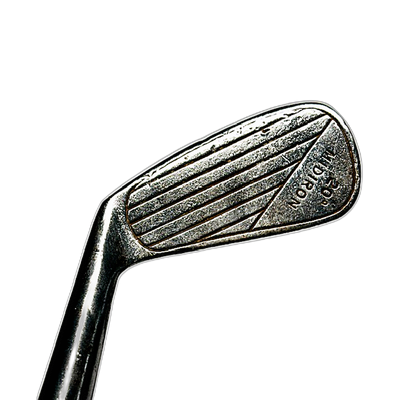
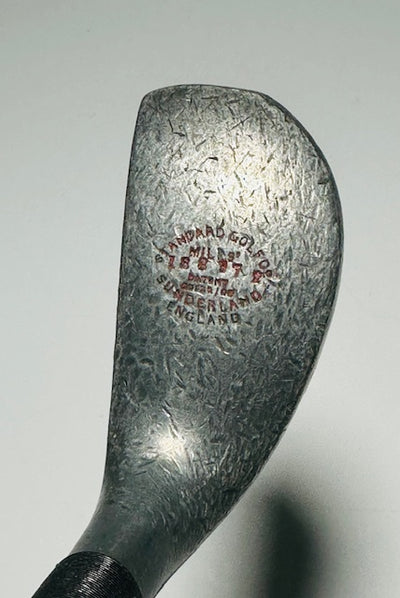
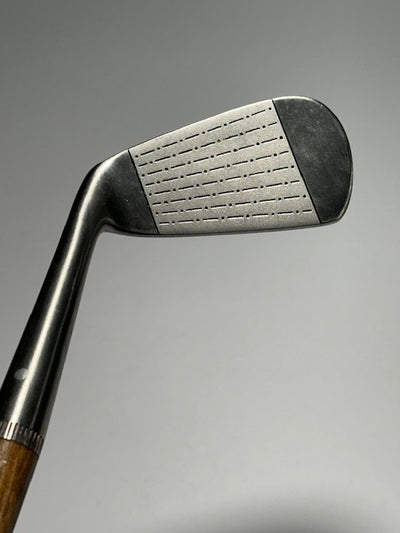
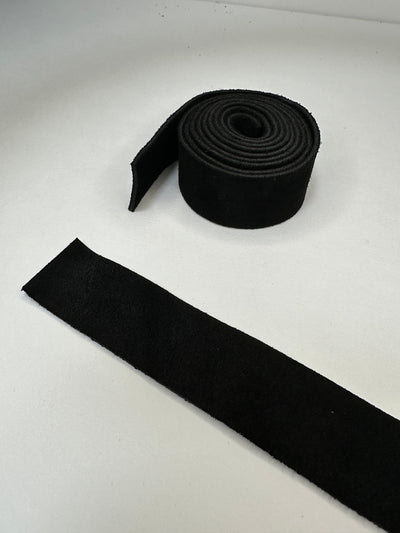
These are authentic pre-1935 golf clubs, hand-forged by makers like Tom Stewart, Robert Forgan, George Nicoll, and dozens of others, then professionally restored to playable condition. At Old World Hickory Golf, that means I source original clubs, inspect and repair the shafts, tighten the heads, clean and preserve the ironwork, wrap fresh suede or leather grips, and play-test every single one before it goes into the shop. The club in your hands might be 90 to 130 years old, but it's ready for 18 holes today.
Replica Manufacturers
The major replica makers are Louisville Golf, Tad Moore, and St Andrews Golf Co. These companies manufacture brand-new clubs designed to approximate the look, feel, and playability of hickory-era originals. The heads are cast or forged to period-inspired designs, fitted with new hickory shafts, and finished with leather grips. They're well-made products from companies that care about the hickory game. No argument there.
Head to Head: The Full Comparison
| Factor | Restored Originals (OWHG) | New Replicas |
|---|---|---|
| Price per club | $45 to $150 | $150 to $300 |
| Authenticity | The real deal. Genuine antiques. | Modern reproductions inspired by originals |
| Playability | Tournament legal, play-tested | Tournament legal, consistent specs |
| Collectibility | Can appreciate in value over time | Depreciates like any new product |
| Feel | Each club is unique, individual character | Consistent from club to club |
| History | Lived it. 80 to 130 years of real story. | Inspired by it. New product, period styling. |
Let's break each of these down.
Price: Originals Cost Less
This surprises people the most. You'd assume a genuine antique would cost more than a new copy, but it's the opposite. A quality restored original from my shop runs $45 to $150 per club. A comparable replica from Louisville Golf or Tad Moore runs $150 to $300 per club. That means a full set of replicas can easily top $1,000 to $1,800, while a complete set of restored originals from Old World Hickory Golf comes in at $225 to $600.
The math isn't even close. You can build an entire tournament-ready bag of authentic clubs for less than what four or five replica clubs would cost. And that's not comparing bottom-shelf originals to premium replicas. That's quality, professionally restored clubs from notable makers versus standard replica offerings.
Authenticity: There's No Substitute for the Real Thing
A replica hickory club is a new product made to resemble an old one. It's like buying a reproduction antique chair. It looks the part, functions fine, and there's nothing wrong with it. But it's not the thing it's imitating.
A restored original is the actual artifact. The iron head in your hands was forged in a Scottish workshop by someone whose name is stamped into the metal. The hickory shaft was shaped from a tree that was already growing when that maker was born. The club has a provenance, a maker, a history that no reproduction can replicate. When you stand on the tee at a hickory tournament holding a Tom Stewart mashie, you're holding something that was there. A replica, no matter how well made, is something that wishes it was.
For some players, that distinction doesn't matter much. For others, it's the entire point. Either way, it's a real difference worth understanding before you spend your money.
Playability: Both Work, Different Experience
Both restored originals and replicas are legal in Society of Hickory Golfers sanctioned tournaments. The SoHG allows clubs with hickory shafts and period-appropriate designs, and both categories qualify. You won't face any equipment challenges at registration either way.
Where they differ is in the playing experience. Replicas are manufactured to consistent specifications. If you buy a replica mashie, it'll have predictable loft, lie, length, and weight. If your buddy buys the same model, his will match yours closely. That consistency is genuinely useful if you want a set that feels uniform from club to club.
Originals are individuals. Every club was hand-forged, so no two are exactly alike. The loft on one mashie might be a degree or two different from another. The shaft flex varies with the grain of the specific piece of hickory. The weight distribution reflects the hand of whoever forged the head. Some players find this maddening. Most of us find it wonderful. Learning the personality of each club in your bag is one of the deepest pleasures of hickory golf. Your niblick runs a little hot? You learn to play it. Your mid-iron has a slight draw bias? You work with it. Each club becomes a relationship, not a tool.
When I build a starter set, I match the clubs for feel and playability. I'm not grabbing six random irons out of a bin. I'm selecting clubs that complement each other, cover the right range of lofts and distances, and feel like they belong together. The individual character of each club is still there, but the set works as a unit.
Collectibility: Originals Hold and Gain Value
Here's a practical consideration that doesn't get discussed enough. Restored original hickory clubs can appreciate in value. The supply of genuine pre-1935 clubs is finite and shrinking as clubs are lost, broken, or absorbed into permanent collections. Demand is growing as hickory golf gains popularity. That's a recipe for appreciation, especially for clubs from premium makers in good condition.
Replicas, like any manufactured product, begin depreciating the moment you buy them. In the Louisville Golf vs original comparison, a Louisville Golf mashie purchased for $250 today will be worth less next year, and less the year after that. There's nothing wrong with that. Plenty of things we buy depreciate. But if you're spending $1,500 on a set of replica clubs, understand that you'll never get that money back. Spend $400 on a set of quality restored originals and you might actually come out ahead if you ever decide to sell.
New clubs every week, gone fast.
No spam. Just a quick note when a restored club from a notable maker hits the shop — Tom Stewart, Forgan, Nicoll, Spalding.
Feel: Consistency vs. Character
I touched on this under playability, but it deserves its own section because feel is such a personal thing in golf.
Replicas feel like well-made new golf clubs with hickory shafts. The finish is clean, the edges are sharp, the grips are uniform. If you're coming from modern equipment, replicas will feel more familiar. The transition is smoother because the manufacturing precision is closer to what you're used to.
Originals feel like what they are: hand-forged tools made by individual makers over a century ago. There's a warmth to the metal, a softness in the forging, a weight distribution that feels organic rather than engineered. The best way I can describe it is that a replica feels made. An original feels born. After 24 years of coaching golfers and years of restoring these clubs, I can tell you the feel difference is real and it matters. Most players who've hit both prefer the originals, but this is genuinely subjective and I respect the folks who go the other way.
History: Lived It vs. Inspired By It
This is where restored originals are in a category of their own and no comparison is really possible.
Every original hickory club has a story. Take a George Nicoll Wizard putter — forged in Kirriemuir, Scotland, probably in the 1910s or early 1920s. Someone bought it, played it, maybe carried it through decades of Saturday morning rounds at a course that might not even exist anymore. It crossed an ocean at some point. It survived wars, moves, garage sales, and the slow accumulation of years. When one of those comes through my shop, restored and ready to play again, that's not marketing copy. That's just what happened.
A replica has no story yet. It left a factory last month. It's a blank page. Some players will write their own stories with it, and that's great. But if part of what draws you to hickory golf is the connection to the game's history, to the hands that came before yours, then there's no contest. Originals carry that weight. Replicas don't.
When Replicas Make Sense
I want to be fair here, because replicas do have legitimate use cases.
If you're a left-handed player, original left-handed hickory clubs are genuinely rare. Replica makers offer left-handed options that the antique market often can't. If you need extreme custom fitting with specific shaft lengths or lie angles outside the range of what originals offer, replicas can be built to spec. And if you're someone who wants zero variability, where consistency from club to club is your top priority and individual character isn't appealing, replicas deliver that.
Outside of those situations, I think restored originals are the better buy for most players. You get more authenticity, more history, better value, and a playing experience that connects you to the game in a way that new equipment can't.
Going replica? The Tad Moore OA complete set at $1,700 is the cleanest one-purchase from a major maker, and Tad Moore sets do win Society of Hickory Golfers events — nobody at registration is going to look down on you. Going restored? A matched 7-club starter set is $225. The budget Kro-Flite play set is $175. Individual clubs start at $25 for a Farrell Bros mashie. Same game, different bag, very different price tag.
The Best of Both Worlds
Here's what I think Old World Hickory Golf offers that neither raw antiques nor replicas can match: authentic original clubs, professionally restored to modern playability standards, at a price below what you'd pay for reproductions.
You're not buying a dusty relic that might fall apart on the third hole. You're not buying a new product pretending to be old. You're buying the real thing, brought back to life by someone who knows these clubs inside and out, tested on the course, and guaranteed to play. That's a category that didn't really exist until restorers like me started treating these clubs as instruments rather than antiques.
If you're looking for the best hickory clubs to buy, browse the full collection and see what's available. If you want a complete setup ready to go, the 7-club play set is matched for playability and covers every shot from tee to green. For a deeper look at pricing across the board, the hickory golf price guide breaks down what to expect at every level.
Two Ways to Build Your Bag. Restored or replica, both belong on the course. Pick the one that fits how you want to play.
Men's 7-Club Hickory Play Set
The restored answer. Real history, lower price, ready to play.
$225Tad Moore OA Complete Hickory Set
The replica answer. Consistent specs, complete out of the box.
$1,700T. Morris 1885 Splice-Neck Putter Replica
Replica done well at a lower price. Same lineage, different bag.
$125Frequently asked questions
Are restored hickory clubs better than replicas?
For most players, yes. Restored originals cost less, carry real history, hold their value better, and are tournament-legal under Society of Hickory Golfers rules. Replicas have a few specific use cases (left-handed players, extreme custom fit) but they don't beat originals on value or authenticity.
How much do restored hickory clubs cost compared to replicas?
Restored playable originals run $45-$150 per club. New replicas run $150-$300 per club. A complete tournament-ready restored set runs $225-$600. A complete replica set typically runs $1,000-$1,800.
Are hickory replicas tournament-legal?
Some are, some aren't. Society of Hickory Golfers sanctioned events require pre-1935 original clubs. Replicas designed for casual play or events with looser rules can work, but check the specific tournament's regulations before showing up with a bag of new-build clubs.
When does a replica make more sense than a restored original?
Three cases. First, left-handed players, because original left-handed hickory clubs are rare. Second, golfers who need an unusually custom fit that's hard to find in vintage stock. Third, players who want zero variability between clubs in a set. For everyone else, restored originals win.
Do restored hickory clubs hold their value?
Yes, and they often appreciate. Supply is finite, demand is rising, and named-maker pieces in good condition have a real collector market. Replicas depreciate like any new product the moment you take them out of the bag.
What makers should I look for when buying restored hickory clubs?
Top makers include Tom Stewart (pipe cleek mark), Robert Forgan, McEwan, Auchterlonie, Robert Condie, and George Nicoll. American makers Spalding, Wilson, and MacGregor produced solid playable clubs at lower price points.
Are restored or replica hickory clubs better for wall decor?
Restored originals win for decor too. The patina, the real maker's stamps, and the worn leather grips don't reproduce. A replica looks like a prop. A restored original looks like history. See our wall decor buyer's guide for the full breakdown.