Most people know St. Andrews for the Old Course.
I know it for the forge.
Robert Condie was born in Cupar, Fife, a market town in the heart of Scottish golf country. He came up the right way, apprenticing under two of the most respected cleekmakers of the era: James Anderson in Anstruther and Robert White in St. Andrews. By 1890 he had his own shop and his own fire.
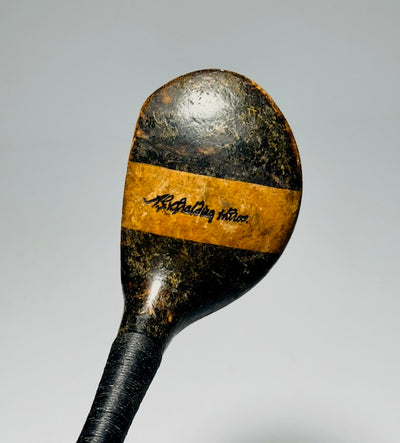
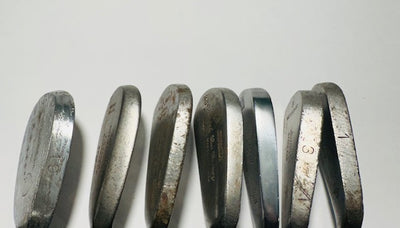
From the start, he did things differently. While other makers were chasing volume, Condie was obsessing over feel. Every iron head that left his forge was hand-shaped. Not cast, not dropped, not stamped by a machine. His cleek marks became his signature: first a fern, then later a rose. Simple, unmistakable, and earned.
If you've ever picked up a smooth-face iron from St. Andrews, you know what that fire produced. Or one of our pre-1904 gutty-era smooth face sets: same generation, same hands-and-hammer philosophy.
In the late 1890s he made a trip most people don't know about. He traveled to America specifically to study drop-forging, the industrial method that was transforming club production on this side of the Atlantic. He wasn't dismissive of it. By all accounts he was genuinely impressed by what modern facilities could do at scale.
Then he went back to St. Andrews and picked up his hammer.
That decision, made with full information, not out of ignorance or romanticism, is what separates Condie from a lot of craftsmen of his era. He didn't choose hand-forging because he didn't know any better. He chose it because he knew exactly what he'd lose if he stopped.
His clubs carried the stamp HAND FORGED and WARRANTED. In his shop those weren't marketing words. They were a promise.
One of those clubs became the most famous putter in golf history. Bobby Jones called it "Calamity Jane." He used it to win 12 of his 13 major championships. The original now sits in a case at Augusta National. Condie's name isn't on the trophy, but his hands built the instrument that helped fill the cabinet.
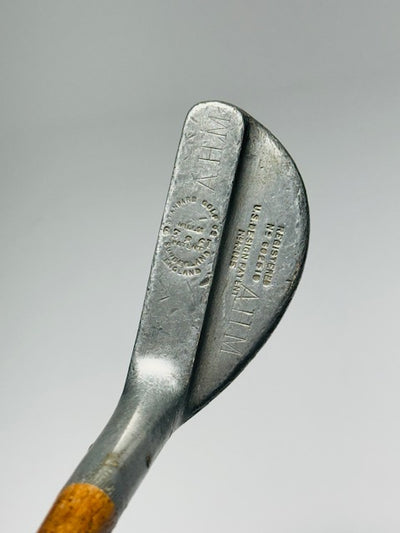
We don't have a Calamity Jane in the shop. Nobody does. That one's behind glass. But we keep a few putters cut from the same Scottish wood and bone: an Old Tom Morris 1885 splice-neck replica, and now and then a Forgan & Son brass putter out of St. Andrews. Different hands, same idea. Both built play-ready, the way Condie would have wanted. (If you're weighing original vs. replica, we've got a separate piece on that.)
He died in 1923. His son George carried on the firm as R. Condie & Sons Ltd. The forge kept burning a little longer.
When I hold a Condie iron today, rose mark, hand forged, hickory shaft, I'm holding more than a golf club. I'm holding a decision. One man's answer to the question every craftsman eventually has to face: what kind of work do I want my name on?
He answered it. And the work has lasted over a century.
A tip of the cap to Jon McClean, whose research and stewardship of Condie's history made this piece possible. If you've spent any time in the hickory community, you've benefited from his work.
What craftsman, in any field, has shaped how you think about the standard you hold yourself to?
Like this kind of story?
One short email a month. New restorations, a bit of history, the occasional rabbit hole.
Carry the era in your bag. We restore clubs from Condie's generation — hand-forged smooth-face irons, mallet and blade putters from the Bobby Jones era, and complete play-ready sets.