One of the biggest hurdles for people getting into hickory golf is learning the different types of hickory golf clubs. Walk into this world and suddenly everyone's talking about mashies, niblicks, cleeks, and spoons. It sounds like a different language, and honestly, it kind of is. These names date back to the 1800s, long before anyone thought to number their clubs. If you're shopping hickory golf clubs for sale right now, this guide will help you understand what you're actually looking at.
I put this guide together as a reference for every hickory golf club type you'll run into, what they do, and what they translate to in modern terms. Bookmark this one. You'll come back to it.
Why the Old Names?
Before the 1920s and 30s, golf clubs weren't numbered. Each club had a name based on its design, origin, or intended use. A "cleek" comes from the Scottish word for hook, describing the shape of the clubhead. A "niblick" likely derives from "nib," meaning a short nose, referencing the club's small, heavy head.
When matched sets with numbered irons became popular in the 1930s, the old names gradually fell out of everyday use. But in hickory golf, we keep them alive. Knowing your club names is more than practical. It connects you to the history of the game.
The Full Hickory Club Reference
Here's every major club type you'll see in a hickory bag, along with the modern equivalent and typical use. I've organized them from longest to shortest.
Woods
| Hickory Name | Modern Equivalent | Typical Use |
|---|---|---|
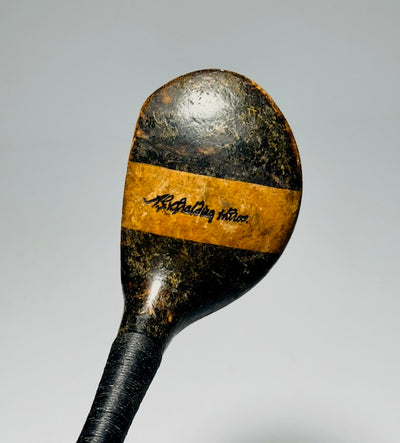
| Driver | Driver | Tee shots. The longest club in the bag with the least loft. Persimmon head, often with a leather or bone insert on the face. |
| Brassie | 2-wood | Long fairway shots and tee shots on tighter holes. The brassie golf club is named for the brass sole plate that protected the wooden head from ground contact. |
| Spoon | 3-wood | Fairway shots where you need height and distance. The face has a concave "spooned" shape that helps get the ball airborne. The most versatile wood in the bag. |
Browse our full selection of restored hickory woods. The W.H. Ball Lancaster brassie ($50) and the Spalding S925 driver ($50) are good examples of what a play-ready wood looks like.
Long Irons
| Hickory Name | Modern Equivalent | Typical Use |
|---|---|---|
| Cleek | 1-iron / Driving iron | Long, low shots from the fairway or tee. The cleek golf club has a thin blade and very little loft. A demanding club that rewards good ball-striking. Not for beginners. |
| Mid-iron | 2-iron | Long approach shots. More forgiving than the cleek with slightly more loft. A workhorse for players who can handle long irons. |
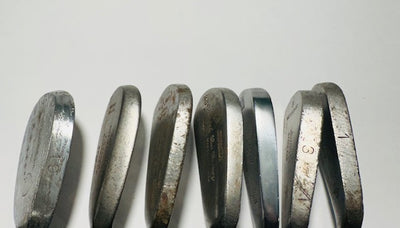
Check out our hickory irons collection for cleeks and mid-irons. The Dickson Special diamondback mid-iron ($35) is a good representative of the type, and the Forgan & Son St Andrews smooth-face iron ($30) is a classic forged cleek.
Mid Irons
| Hickory Name | Modern Equivalent | Typical Use |
|---|---|---|
| Mashie iron | 4-iron | The bridge between long irons and scoring clubs. Good for 150 to 170 yard approaches. A reliable, straight-flying club. |
| Mashie | 5-iron | The most important iron in a hickory bag. The mashie golf club is your go-to approach club for shots in the 130 to 160 yard range. Every hickory golfer needs a good mashie. |
| Spade mashie | 6-iron | A versatile mid-range club. The "spade" refers to the slightly wider, more rounded sole that helps the club glide through turf. Great for controlled approach shots. |
Our hickory irons collection has mashies from top makers. A Farrell Bros Special mashie or a Gibson & Co Kinghorn mashie ($25 each) is the kind of club that should anchor your bag.
Short Irons and Scoring Clubs
| Hickory Name | Modern Equivalent | Typical Use |
|---|---|---|
| Mashie niblick | 7-iron | Short approaches, bump and run shots, and recovery from light rough. One of the most versatile clubs in the bag. A great club for creative shotmaking. |
| Niblick | 9-iron / Wedge | Pitching, chipping, and bunker shots. The niblick golf club has a heavy, compact head with significant loft. The club you reach for around the green. Named for its small, "nib" shaped head. |
Find restored niblicks and mashie niblicks in our collection.
Specialty Clubs
| Hickory Name | Modern Equivalent | Typical Use |
|---|---|---|
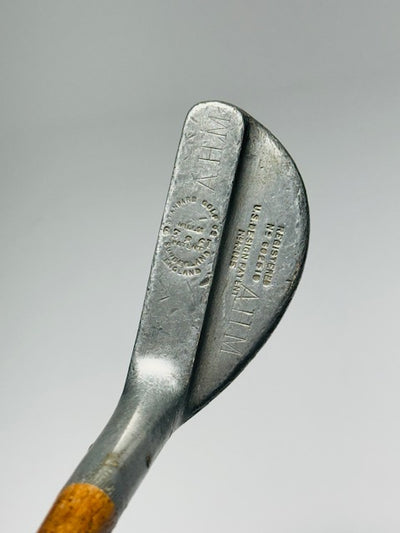
| Jigger | Chipper / Bump-and-run club | The jigger golf club is a low-lofted iron designed for running shots around the green. Less loft than a mashie niblick, longer shaft than a putter. Think of it as a chipper that lets you play creative, ground-hugging shots. A secret weapon for many hickory players. |
| Putter | Putter | Putting. Hickory putters come in a wild variety of designs: blade putters, mallet putters, center-shafted putters, offset models. Many players say a hickory putter is the easiest transition from modern golf. |
Browse our hickory putters to find the right flatstick. From the T. Morris splice-neck 1885 replica ($125) to a Forgan & Son St Andrews brass-faced blade ($60) to an A.G. Spalding Schenectady mallet ($80), there's a putter for every stroke.
The Full Comparison Chart
Here's the full translation at a glance:
| Hickory Club | Modern Equivalent |
|---|---|
| Driver | Driver |
| Brassie | 2-wood |
| Spoon | 3-wood |
| Cleek | 1-iron / Driving iron |
| Mid-iron | 2-iron |
| Mashie iron | 4-iron |
| Mashie | 5-iron |
| Spade mashie | 6-iron |
| Mashie niblick | 7-iron |
| Niblick | 9-iron / Wedge |
| Jigger | Chipper / Bump-and-run club |
| Putter | Putter |
What About a 3-Iron or 8-Iron Equivalent?
You'll notice some gaps in the numbering. That's because hickory era clubs didn't follow a neat 1 through 9 progression. The loft gaps between clubs were bigger and less standardized than modern sets. Some makers produced in-between clubs with their own names, but the ones listed above are the standard types you'll find at any hickory event.
The truth is, hickory golfers learn to manufacture shots. Need something between a mashie and a mashie niblick? You choke down, adjust your stance, or change your swing length. That creativity is one of the most rewarding parts of playing with these clubs.
New clubs every week, gone fast.
No spam. Just first dibs when restored clubs hit the shop.
Which Clubs Should You Start With?
If you're new to hickory golf, you don't need one of everything. The Society of Hickory Golfers recommends a six club setup, and I agree completely. Here's what I'd put in a beginner's bag:
- Spoon (your tee club and long fairway club)
- Mid-iron (long approaches)
- Mashie (your primary approach club)
- Mashie niblick (short game versatility)
- Niblick (pitching and bunkers)
- Putter
That covers every situation on the course. As you play more, you'll figure out where the gaps are in your game and add clubs accordingly. Some players eventually carry 7 or 8 clubs, but plenty of experienced hickory golfers stick with 6 and play beautifully.
Our 7-club hickory play set ($225) is built around this exact six-club philosophy with a putter included. If you're looking to spend less, the Kro-Flite play set ($175) is the budget way in. If you'd rather skip vintage entirely and play new replicas, the Tad Moore OA complete hickory set ($1,700) is the premium option. If you're brand new, check out our beginner's guide to getting started with hickory golf for everything else you need to know.
A Note on Makers and Quality
Not all hickory clubs are created equal. Clubs from premier Scottish and British makers like Tom Stewart, Robert Forgan, George Nicoll, and Anderson tend to be the most sought after. American makers like Spalding, MacGregor, Wright & Ditson, and Burke also produced excellent clubs.
What matters most for playability is the condition of the shaft, the integrity of the head, and the quality of the restoration. A well-restored club from a lesser-known maker will outperform a poorly maintained club from a famous one every time. That's why I put so much care into every restoration. You can read about the full restoration process here. If you're trying to decide between an original restored club and a new replica, I wrote a side-by-side breakdown of restored vs replica hickory clubs that walks through both. And if pricing's the question, here's what hickory clubs actually cost at every level.
Start Building Your Bag
Now that you know what everything's called and what it does, the simplest move is to grab a 7-club starter set ($225) and go play. Every club I sell is fully restored, inspected, and ready for tournament play. If you've got questions about which clubs are right for your game, send me a message. I love helping people find the right sticks.
Build the bag from this guide. Three play sets at three price points.