Stadium Golf Co. · Anchor Cleek Mark · c. 1920s · Source: Georgiady, "Cleek Marks and Trademarks on Antique Golf Clubs"
The Stadium Golf Manufacturing Company was a family-owned London clubmaker active from roughly 1923 to 1927. Run by Parkstone professional Hugh Williamson and managed in production by Jimmy Ross (who later ran Slazenger's works), Stadium produced hickory-shafted irons forged by the Gourlay family and stamped with a distinctive anchor cleek mark. The firm survived only four years before the steel shaft revolution closed it. Today, surviving Stadium Golf clubs are among the most sought-after collector pieces of the late hickory era.
A London Clubmaker With Outsized Ambition
In the closing years of the hickory shaft era, a London firm with ambition, original designs, and connections to England's best golf professionals burned bright for a short stretch. The Stadium Golf Manufacturing Company left behind clubs that collectors hunt for precisely because the company never made it to the steel age.
The People Behind Stadium Golf
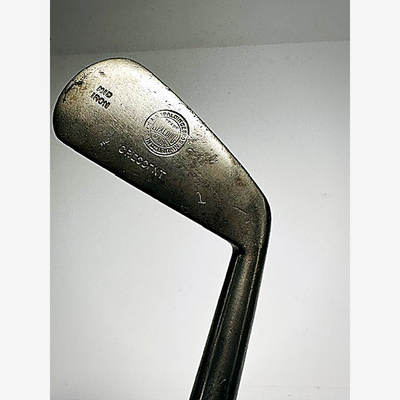
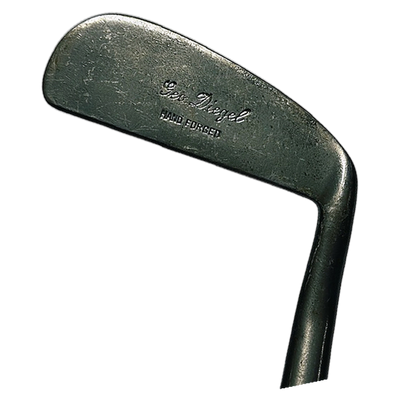
At the head of the firm was Hugh Williamson, professional at Parkstone Golf Club in Dorset from 1910 to 1927. Day-to-day production was managed by Jimmy Ross, who later took over the manufacturing works at Slazenger. Iron heads were forged by the Gourlay family and stamped with the firm's distinctive anchor cleek mark alongside "Warranted Hand Forged."
That partnership matters. Gourlay-forged heads from this period are among the cleanest you will find on the antique market. When you see the anchor mark, you are looking at craft work from one of the most respected forging families in British clubmaking history.
Company at a Glance
- Location: London, England
- Active period: c. 1923 to 1927 (approximately four years)
- Ownership: Family-owned under Hugh Williamson
- Production manager: Jimmy Ross (later of Slazenger)
- Cleek mark: Anchor, stamped on iron heads
- Iron heads forged by the Gourlay family
- Notable club lines: Korecta, Rivers-Zambra Scuffler
Signature Designs: The Korecta and the Rivers-Zambra
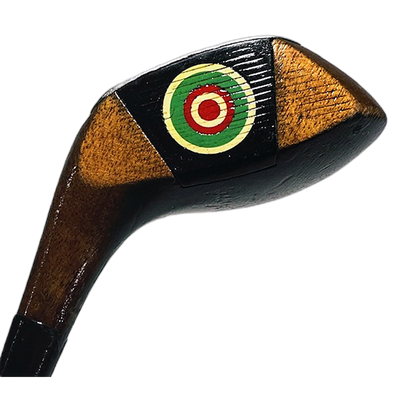
What set Stadium apart was a willingness to experiment with iron head geometry. The Korecta line carried a peaked and cut-away sole design, a top aiming notch, and a target face. This was a registered, patent-style innovation aimed at improving alignment and ground contact. A surviving Korecta niblick was made for Ernest R. Whitcombe, professional at Came Down G.C. from 1910 to 1925 and later at Meyrick Park.
If that sounds familiar to modern eyes, it should. The Korecta's alignment notch and target face concept anticipates ideas that would not reach mainstream club design for another forty years.
The Rivers-Zambra Scuffler, a specialty putter produced around 1925, is now a recognized collector's piece. Stadium also produced conventional staple irons personalized for club professionals across England, including Percy Allis of Wanstead G.C. and Syd Hillman of the Goodwood Club.
"The firm made so many exotic clubs one forgets they also produced staple models."
— Antique Golf Scotland
A Short Run, A Lasting Legacy
Stadium Golf survived only about four years. The firm was a casualty of the steel shaft revolution that swept through clubmaking in the late 1920s. Original designs, Gourlay craftsmanship, and professional connections were not enough to outlast the economics of an industry in transition.
Jimmy Ross went on to Slazenger. Hugh Williamson managed his professional career from Switzerland. The company quietly closed.
For collectors today, that brevity is the appeal. Surviving Stadium clubs are uncommon, immediately identifiable by the anchor cleek mark, and carry genuine provenance tied to named English professionals of the era.
Why Stadium Golf Clubs Still Matter On The Course
A note from our shop. Stadium Golf irons were built as performance tools, not display pieces. The Gourlay forgings hold their geometry well, and we have seen Korecta-line irons restored to course-ready condition that play as cleanly as anything from Spalding or Forgan of the same period.
If you are putting together a play-ready hickory set and have the chance to add a Stadium iron, take it. The provenance is real, the craftsmanship is excellent, and the rarity is genuine without being prohibitive.
How to Identify a Stadium Golf Club
- The anchor cleek mark stamped on the head
- "Warranted Hand Forged" stamped near the anchor
- Korecta line: peaked sole, top notch, target face
- Professional names stamped on commissioned pieces (Whitcombe, Allis, Hillman, etc.)
- Gourlay-quality forging with clean lines and consistent face geometry
If you have one and want it authenticated or restored, reach out to the shop. We handle late-hickory era English forgings regularly and can confirm provenance from the mark and forging characteristics.
FAQ
What was the Stadium Golf Manufacturing Company?
Stadium Golf was a family-owned London clubmaker active from approximately 1923 to 1927, founded by Hugh Williamson and producing hickory-shafted clubs forged by the Gourlay family. The firm closed when steel shafts replaced hickory in the late 1920s.
What is the Stadium Golf cleek mark?
The Stadium Golf cleek mark is an anchor, stamped on iron heads alongside the phrase "Warranted Hand Forged." It is one of the more distinctive cleek marks of the late hickory period.
Are Stadium Golf clubs valuable?
Yes. Because the firm only operated for about four years and produced limited quantities, surviving Stadium Golf clubs are sought after by serious collectors. Korecta-line irons and the Rivers-Zambra Scuffler putter are particularly prized.
What was the Korecta line?
The Korecta was Stadium Golf's signature iron design featuring a peaked and cut-away sole, a top aiming notch, and a target face for improved alignment. It was registered as a patent-style innovation in the mid-1920s.
Who forged Stadium Golf iron heads?
The Gourlay family forged Stadium Golf's iron heads. The Gourlays were among the most respected forging families in British clubmaking, and their work is recognizable by its clean geometry and consistent face quality.
Frequently asked questions
What was the Stadium Golf Manufacturing Company?
Stadium Golf was a London-based hickory clubmaker that operated from roughly 1923 to 1927. The firm was headed by Hugh Williamson, professional at Parkstone Golf Club, with production managed by Jimmy Ross, who later moved to Slazenger. Iron heads were forged by the Gourlay family and stamped with the firm's anchor cleek mark.
How do you identify a Stadium Golf club?
Look for the anchor cleek mark stamped on the iron head, alongside "Warranted Hand Forged." The Korecta line is recognizable by its peaked and cut-away sole, top aiming notch, and target face. Some Stadium clubs were personalized for named English professionals like Ernest Whitcombe, Percy Allis, and Syd Hillman.
What is a Korecta hickory club?
The Korecta was Stadium Golf's signature iron line, featuring an alignment notch on the top edge and a target face. It was an early experiment in alignment-aid design that anticipated ideas the industry wouldn't adopt in mainstream clubs for another forty years.
Are Stadium Golf clubs valuable today?
Yes. Surviving Stadium clubs are scarce because the firm only operated for about four years. They carry strong collector interest thanks to the Gourlay forging quality, the experimental Korecta design, and documented provenance to named English professionals of the 1920s.
What happened to Stadium Golf Company?
The firm closed around 1927, a casualty of the steel shaft revolution that swept through clubmaking in the late 1920s. Jimmy Ross moved on to Slazenger. Hugh Williamson managed his professional career from Switzerland. The clubs remained.
Can Stadium Golf irons still be played?
Restored Korecta-line irons play as cleanly as anything from Spalding or Forgan of the same period. The Gourlay forgings hold their geometry well, which is why Old World Hickory Golf considers Stadium pieces tournament-ready when properly restored.
Looking For A Stadium Golf Club?
We come across late-hickory era English irons in our restoration work and would be happy to help you source or authenticate a Stadium Golf piece. Browse our current hickory iron inventory, or contact the shop and tell us what you are hunting for.
About the author: Brad Harvey is the head restorer at Old World Hickory Golf. He has restored over a thousand hickory-shafted clubs from the 1880s through the late 1920s, including original forgings from English, Scottish, and American makers.
Sources: Georgiady, "Cleek Marks and Trademarks on Antique Golf Clubs"; Antique Golf Scotland.