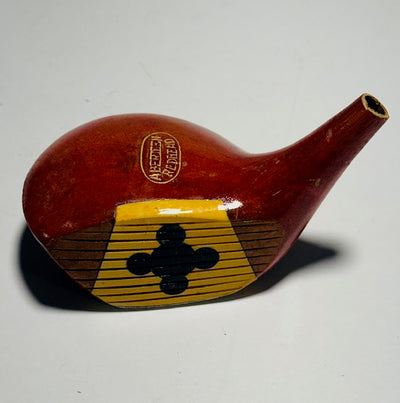
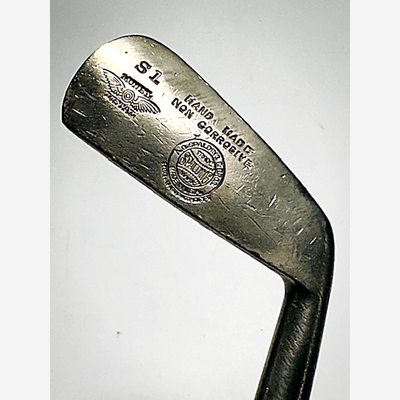
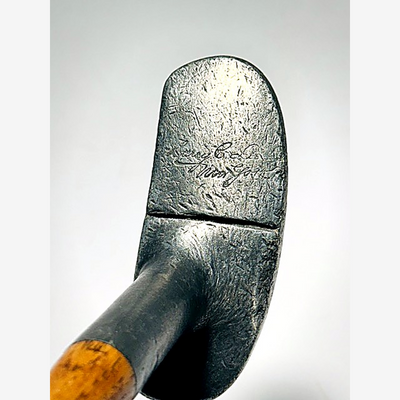
The club is heavier than you expect. That's the first thing you notice when someone hands you one of our restored hickory golf clubs, a 1920s mashie. Forged steel and hickory, sitting heavy in your hands. The leather grip is a little tacky, worn smooth in spots by hands you'll never know. You take a half swing and the shaft flexes in this way that graphite never does. There's a delayed whip to it, this feeling that forces you to slow down and actually feel the clubhead. Then you make contact and it's a sound you forgot golf could make. A clean, solid crack that makes the guy two bays over look up from his phone.
If you've never heard of hickory golf, you're about to understand why the biggest hickory tournament in the country sells out in under an hour. And if you have, you already know. Once you swing one of these clubs, the modern game never looks quite the same.
What Is Hickory Golf?
So what is hickory golf, exactly? At its simplest, it's the game played with authentic pre-1935 clubs. The ones with shafts made from wood instead of steel or graphite. In the earliest days of golf, club makers in Scotland and across Europe used whatever hardwoods they could find locally. Ash, beech, hazel, other dense timbers. It wasn't until the game crossed the Atlantic that American hickory became the gold standard. Something about the combination of strength, flexibility, and shock absorption set it apart from anything else. No other wood could match it.
But calling it “simple” undersells what it actually is. This isn't a novelty. It's not a costume party or a gimmick booth at a charity scramble. Hickory golf is a living, competitive, growing branch of the sport with its own tournaments, governing bodies, and fiercely devoted players.
For roughly five hundred years, from the game's origins on the Scottish linksland through the early 1930s, every golfer on earth played with wood shafted clubs. The earliest Scottish players used ash and other native hardwoods. But once American hickory entered the picture in the mid 1800s, it quickly became the only serious option. Stronger, more flexible, more durable than anything European forests could offer. By the late 1800s, hickory had conquered the golf world entirely. Bobby Jones won his Grand Slam with hickory. Harry Vardon, Old Tom Morris, Francis Ouimet at Brookline. All hickory shafts. Steel shafts were legalized by the USGA in 1924 and the R&A in 1929, and by the mid 1930s hickory had been pushed to the margins. The game moved on. The clubs went to attics and antique shops and the bottoms of garage sale bins. Millions of vintage golf clubs and antique golf clubs scattered across the country, waiting.
But they didn't disappear. They couldn't. There were simply too many of them, crafted too well, carrying too much history.
Today, the Society of Hickory Golfers is the central hub for organized play in the United States. They sanction tournaments and maintain the rules that govern which equipment qualifies. The competitive scene is deeper than most people realize. The U.S. Hickory Open, the marquee event on the calendar, sells out within an hour of registration opening. That's not a typo. Within one hour. The 2026 edition heads to Gearhart, Oregon in September, and if past years are any indication, you'll want to be watching the registration page the moment it goes live.
Regional groups have popped up across the country and the international scene spans Scotland, Sweden, Australia, Japan, and beyond. What started as a handful of history buffs playing weekend rounds has turned into a movement. One with waiting lists.
Why Golfers Are Coming Back to Hickory
The reasons people pick up a hickory club for the first time vary. The reason they can't put it down is almost always the same.
The feel comes first. Modern golf equipment is engineered to be forgiving. Oversized heads, perimeter weighting, multi material constructions, all designed to minimize the consequences of a bad swing. Hickory does the opposite. There's nothing between you and the shot. No technology smoothing out your mishits or inflating your distance. When I first watched Brad Harvey swing a hickory club, he told me about the moment Peter Yagi, a master craftsman, handed him one at a golf show years ago. He called it “golf stripped down to its essence.” That phrase sticks because it's exactly right. A well struck mashie delivers feedback so pure it borders on addictive. You know immediately, in your hands and your ears, whether you caught it clean. And when you do, there's a satisfaction your $500 game improvement iron simply can't replicate.
The history sounds like a soft reason until you're standing on a tee holding a club forged in a Scottish workshop before the Titanic sailed. These aren't reproductions. They're original artifacts. Hand forged, hand shaped, stamped with makers' marks from companies that closed their doors a century ago. The scratches on the sole aren't flaws. The dings on the hosel aren't damage. Brad puts it simply: that's history, not defects. His restoration philosophy leans toward historical accuracy over cosmetic perfection, and once you understand why, you can't unsee it. When you hold a club made before your grandparents were born, one that's been restored to play but not stripped of its story, you feel something that new equipment just can't give you. You feel connected to the long arc of this game.
The community is small, passionate, and almost aggressively welcoming. Hickory golf doesn't have the velvet rope energy of some corners of the sport. It has the energy of people who found something they love and want you to find it too. The Northwest Hickory Players, one of the most active regional groups, maintain over fifty loaner sets specifically for newcomers. Fifty. That's not a club lending out a spare set. That's an organization building infrastructure so cost and access never keep someone from trying this.
Tournaments are social as much as competitive. The post round conversations tend to be less about scores and more about the provenance of whoever's newest find. The 2026 U.S. Hickory Open in Gearhart this September will draw players from across the country, but plenty of them started exactly where you are right now. Curious, maybe a little skeptical, holding a weird old club and wondering what the fuss is about.
What You Need to Get Started
Here's the best news for the curious: hickory golf for beginners is simpler than most people think, and you don't need much to get started.
Want the deep dive? We wrote a whole guide on how to get started playing hickory golf. It covers your first club, where to find tournaments, and the rookie mistakes worth avoiding.
The most common misconception is that you need a full period correct bag before you can play. You don't. Start with a single club mixed into your modern set. A mashie tucked in alongside your hybrids, a hickory putter replacing your mallet for a weekend round. Nobody's checking your bag at the first tee, and honestly, pulling out one hickory club during a casual round is the best conversation starter in golf.
Quick decoder ring for the terminology, because the old names trip everybody up at first. A mashie is roughly a modern 5 iron. A niblick maps to about a 9 iron. A cleek plays like a 2 iron, a brassie like a 2 wood, and a spoon like a 3 wood. The lofts and lengths vary club to club since these were hand forged, not stamped to spec, but those translations will get you oriented.
The more important distinction for a beginner is understanding what's playable versus what's collectible versus what's a wall hanger. A playable club has a solid shaft, a secure head, and a grip you can actually hold. It might have patina and character, but it's structurally sound and ready for the course. A collectible might be rare or historically significant but too fragile or valuable to risk swinging. And a wall hanger? It looks great over the fireplace, but the shaft is cracked, the head is loose, and it's not going back to a golf course without serious work. Knowing which category you're buying matters a lot, and it's the number one source of beginner frustration. eBay is littered with listings that blur these lines, selling wall hangers as playable clubs to buyers who can't tell the difference.
On price, the barrier is lower than you'd think. A play-ready McBrier Mashie, a solid mid iron that'll teach you what hickory feels like, starts at twenty-five dollars. A Nicoll's Wizard putter, hand forged by George Nicoll of Kirriemuir, Scotland, runs forty dollars.
And if you want to skip the one at a time approach and jump straight in, a hickory golf starter set covers everything from tee to green for two hundred and twenty-five dollars. Professionally restored, new suede grips, tournament ready, and it clears the free shipping threshold. That's less than most golfers spend on a single modern driver.
What Hickory Golf Actually Feels Like
There's a particular quality to an early morning round that every golfer knows. The dew still heavy on the fairways, the light coming in low and gold, the course quiet enough that you can hear the flag stick rattle from a hundred and fifty yards out. Now put hickory in your hands and all of that sharpens.
Your swing changes first. It has to. You can't muscle a hickory shaft the way you can a stiff steel or graphite one. The wood flexes, loads, and releases on its own timeline, and if you try to overpower it, the club will let you know immediately. So you slow down. Your tempo smooths out. Your backswing gets shorter, your transition gets patient, and somewhere around the third or fourth hole you realize you're swinging better with these hundred year old clubs than you do with your modern ones. It's not that hickory makes you a better golfer. It just won't let you get away with the bad habits that technology usually hides.
Then there's the creativity. This might be the thing that hooks people deepest. With a modern fourteen club bag, you've got a club engineered for every situation. Gap wedge for fifty four degrees, lob wedge for the greenside bunker, a specific hybrid for that 190 yard carry over water. A hickory bag is five to seven clubs and a whole lot of imagination. That mashie in your hands isn't just a 5 iron. It's a punch shot under tree branches, a chip and run from forty yards, a bump off the front of a firm green. You learn to work the ball because you have to, and the creative satisfaction of manufacturing a shot with one versatile club beats the mechanical precision of pulling the mathematically optimized option every time.
The sounds stay with you. The crack of a persimmon driver off the tee. Deeper, warmer, more resonant than titanium's metallic ping. The clean thwack of a forged iron compressing a ball on a tight lie. These aren't nostalgia. They're the actual acoustic signatures of the game as it existed for centuries, and your ears recognize the difference instantly. There's a reason golfers who've played hickory once describe the sound of a titanium driver as “tinny.” Once you've heard the original, the modern version sounds like a counterfeit.
And then there are the conversations. Other golfers will stop you. On the practice green, on the tee box, walking between holes. “What are those?” they'll ask, and you'll watch their expression shift from confusion to fascination as you explain. You'll hand them a club and watch them take a swing, and you'll see the same thing happen to them that happened to you. That moment when the weight settles, the shaft flexes, and something clicks.
Golf the way it was meant to be. Simple. Human. Real.
Not sure what you've got?
I'll send you the maker-mark cheat sheet, plus a heads-up when new restored clubs hit the shop.
You don't have to take anyone's word for it. You just have to swing one. Everything is play tested and backed by a playability guarantee, because as Brad says, “this is a work of art. It's not done by a money maker or a foundry. It's done by a craftsman.”
Start with the 7-club starter set. Restored, regripped, play-tested, $225 with free shipping. That's everything you need from tee to green, and less than most golfers spend on a single driver.
Three Ways to Start. Every set ships restored, re-gripped, and play-tested.
Pre-1904 Gutty-Era 4-Club Set
The history hook. Smooth-face irons from the gutty era.
$125Kro-Flite Play Set
Budget alternative. Restored 8-club PGA set.
$175Men's 7-Club Hickory Play Set
The starter set the post names. Tee to green, $225.
$225Frequently asked questions
What is hickory golf?
Hickory golf is the game played with authentic pre-1935 clubs that have wooden shafts instead of steel or graphite. The clubs use names like mashie, niblick, and brassie instead of numbers. It's golf stripped down to its essentials, without modern launch monitors or adjustable components.
Is hickory golf still played today?
Yes, and it's growing. The U.S. Hickory Open sells out within an hour of registration opening. The Society of Hickory Golfers governs play in the United States, with active scenes in Scotland, Sweden, Australia, and Japan. Regional tournaments run year-round across America.
Who governs hickory golf?
The Society of Hickory Golfers (SoHG) sanctions tournaments and sets equipment rules in the United States. SoHG events require pre-1935 original clubs with hickory shafts. Regional groups like the Northwest Hickory Players run local events under SoHG guidelines.
What's the difference between hickory and modern golf?
The clubs. Hickory shafts flex more than steel or graphite, which forces a smoother swing tempo. Forged iron heads are smaller and less forgiving. The game rewards feel and technique over distance and forgiveness. Expect scores 10-15 strokes higher than modern golf across all skill levels.
How old are hickory golf clubs?
Authentic hickory clubs date from roughly the 1890s through 1935. Steel shafts were approved by the USGA in 1924 and the R&A in 1929, and steel took over the market by 1935. Any club with a wooden shaft is from that pre-1935 era.
Can beginners play hickory golf?
Yes. The community is unusually welcoming. The Northwest Hickory Players maintain over fifty loaner sets specifically for newcomers, so you can try the game without owning clubs. A single hickory club mixed into a modern bag works fine for casual play.
How much does it cost to start hickory golf?
A single restored hickory club costs $25-$40. A complete seven-club starter set from Old World Hickory Golf runs $225 with free shipping. There's no period-correct equipment requirement. You can start casual for under $50.
Are hickory golf clubs used as decor?
Yes. The same authentic pre-1935 clubs that play also hang. Interior designers source them for golf-themed bars, country club halls, and home offices. The patina you can't fake on a reproduction is the same thing that makes them collectible to play. Read our wall decor buyer's guide for what to look for.