Modern golfers will spend $600 on a driver, $200 an hour on lessons, and another few hundred on a launch monitor, all chasing the same thing: a better, more repeatable swing. Here's the uncomfortable part. The single most effective tool for fixing the fundamentals that actually drive improvement costs less than one of those lessons, and it's been around for a hundred years.
A hickory golf club is the best feedback tool a modern golfer can buy. A wooden shaft and a small clubhead give you instant, honest feedback on the three things you can't see in your swing: your tempo, your lag, and your contact. Hit it wrong and the club tells you immediately, through your hands, through the sound, through where the ball goes. That feedback loop is what real improvement is built on, and no graphite shaft will ever give it to you.
Because modern equipment is a miracle of engineering, and it is also a very polite liar. Perimeter weighting, a 460cc head, a shaft tuned to your tempo. All of it exists to hide your mistakes. That's great for your Saturday scorecard and terrible for understanding what your hands and body are really doing.
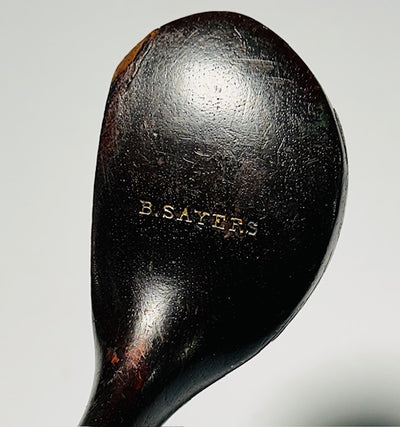
I spend my days building and reshafting century-old clubs into play-ready hickory golf clubs, and I've watched this happen a hundred times. Someone picks one up thinking they're buying a piece of history for the wall. Then they take a swing, and they learn the truth about their golf swing in about three shots.
Here's what a 100-year-old club exposes, and why it improves your game faster than most of what you're already paying for.
1. Your tempo is probably too fast
The first thing every modern golfer learns inside one bucket of balls: you cannot rush a wooden shaft. A graphite shaft snaps back into position no matter how violently you transition from the top. A hickory shaft has more flex and a slower recovery, so if you throw your hands at the ball from the top, the face arrives late and open, and you watch a weak slice die to the right.
The fix isn't mechanical. It's tempo. To flush a hickory club you have to let it load and unload on its own schedule. A smooth gather at the top, an unhurried transition, and trust that the head is coming. Players who've fought a quick transition for years suddenly feel what "in sequence" means after a handful of swings. Then they carry that feel straight back to their modern bag.
2. It catches your early release instantly
Casting, releasing the wrist angle too early, is the most common power leak in amateur golf, and modern irons are very good at masking it. A hickory club is not. When you cast with a wooden shaft you add loft, lose lag, and hit it high and short with a thin, flippy strike you feel in your palms.
Hold the angle a fraction longer, let the shaft do the work, and the ball comes off compressed and low and solid. There's no hiding the difference. A few sessions with a hickory iron teach your hands what real lag feels like better than any drill you've tried, because the feedback is immediate and impossible to argue with.
3. It forces center-face contact
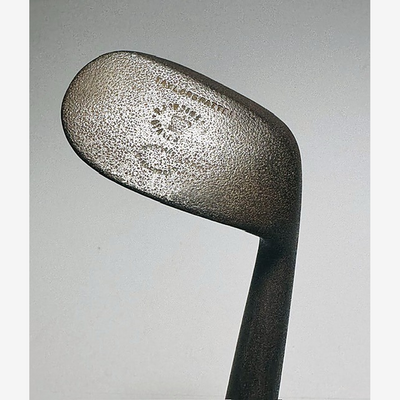
A modern cavity-back gives you 90% of your distance on a heel strike and never says a word. A hickory blade with a sweet spot the size of a quarter gives you a buzzy, dead feel the instant you miss it, and a pure, almost silent thump when you find the middle.
That's the fastest center-contact trainer I know of. You stop steering the ball and start swinging to a balanced finish, because that's the only way to keep finding the middle of a small face. Strike quality is the single biggest predictor of distance and accuracy in the modern game, and nothing builds it faster than a club that refuses to reward a bad one. (It also teaches you to respect the equipment. If you want the why behind that, read how to play and care for hickory clubs.)
4. It teaches you to actually play golf shots
Modern golf is mostly an aerial game. Bomb it, wedge it, spin it, stop it. Hickory rewards a different and frankly more skillful set of tools: the low runner under the wind, the bump-and-run, flighting the ball down, working it both ways on purpose. With less forgiveness and less spin, you learn to shape and flight shots instead of just launching them.
Spend a few rounds thinking this way and you come back to your modern clubs with a shot you didn't have before. The punch out of trouble. The controlled three-quarter wedge. The knockdown into the wind. That isn't nostalgia. That's a lower handicap.
Why this beats another driver, a launch monitor, and half your lessons
Think about how a modern golfer usually tries to get better. A new driver buys you forgiveness, which means it hides the miss instead of fixing it. A launch monitor hands you numbers, but a number can't teach your hands what lag feels like. Lessons are worth every penny, except you only get the feedback while the coach is standing there. The minute you're alone on the range, you're guessing again.
A hickory club gives you the one thing all of those are missing: honest, immediate feedback on every single swing, with nobody watching. It costs less than one lesson, it never needs charging, and it doesn't lie to flatter your ego. That's why I'll put it up against anything in the bag as the most cost-effective way to fix the fundamentals. Not because it's old or charming, but because feedback is what changes a swing, and nothing in golf gives you more of it per dollar.
Add the Best Feedback Tool in Golf to Your Bag →
You don't need a full antique set to get this
Here's the part people get wrong. They think trying hickory means hunting down a complete period bag or spending a fortune. You don't. One playable club teaches every lesson above. A mid-iron, the rough equivalent of a modern 5- or 6-iron, is the perfect place to start. Take it to the range, hit a small bucket, and you'll feel your tempo and your strike change inside an hour. (New to all this? Start with how to get started playing hickory golf, then build a club to your hand.)
Every club we make is a genuine pre-1935 head, hand-finished and reshafted with a play-ready hickory shaft and a fresh grip, built to be hit, not hung on a wall. You pick the head, the shaft, and the grip, and we build it to your hand. It's the easiest way for a modern golfer to add the best feedback tool in golf to the bag.
Start with one. Hit it for a week. Then tell me your modern swing didn't get better.
Build Your Own Playable Hickory Club →
Or shop ready-to-play hickory irons →
Brad Harvey has been building and reshafting hickory golf clubs at Old World Hickory Golf for years. He plays them too.
FAQ
What's the most cost-effective way to improve my ball striking?
Buy honest feedback. A single playable hickory iron costs less than one lesson and gives you instant feedback on tempo, lag, and contact
on every range swing, which is what actually trains better ball striking. It's the cheapest feedback tool a modern golfer can add to the
bag.
Can playing old hickory clubs really improve a modern golf swing?
Yes. A wooden shaft has more flex and a slower recovery than graphite, so it punishes a fast transition, an early release, and an
off-center strike instead of hiding them. That instant feedback trains better tempo, lag, and contact that carry straight back to your
modern clubs.
Do I need a full set of hickory clubs to get the benefit?
No. One playable club, ideally a mid-iron similar to a modern 5- or 6-iron, is enough to feel your tempo and strike change in a single
range session.
Are these clubs actually playable or just for display?
They're built to be played. Each one uses a genuine pre-1935 head that's hand-finished and reshafted with a play-ready hickory shaft and a
fresh grip, then built to your hand through the Club Builder.