People ask me all the time how to restore hickory golf clubs. The short answer: more than you'd think. The long answer is what this post is about.
I've been restoring antique hickory clubs in my shop here in Aloha, Oregon for years, and I've refined a process that turns neglected, sometimes century-old clubs into equipment you can take straight to a tournament. It's part skill, part detective work, and part respect for the history these clubs carry. Here's how it goes, step by step.
Step 1: Sourcing and Selecting Clubs
Restoration starts long before I pick up a tool. It starts with finding the right clubs.
I source clubs from estate sales, antique shops, auction houses, other collectors, and sometimes from folks who find grandpa's old clubs in the attic and reach out to me (if you're wondering what they're worth, start here). For every club I restore and sell, I probably pass on three or four that don't make the cut.
What am I looking for? First, the head has to be structurally sound. Deep pitting, cracks in the hosel, or significant metal loss means the club isn't worth restoring for play. Cosmetic wear is fine and even desirable. That patina tells a story. But structural damage is a deal breaker.
Second, I'm evaluating the shaft. This is where most clubs fail the test. A hickory shaft that's been sitting in a damp garage for 80 years may look fine on the outside but be compromised on the inside. I'll get into shaft inspection in detail below, because it's the most critical part of the entire process.
Third, I look at the maker. Clubs from known quality manufacturers like Tom Stewart, George Nicoll, Robert Forgan, Spalding, and others tend to have better metallurgy and more consistent shaft quality. That said, I've found excellent clubs from smaller makers too. The name on the head isn't everything.
Step 2: Disassembly
Once I've selected a club for restoration, the first hands-on step is careful disassembly. The old grip comes off, which is usually a degraded leather wrap that crumbles as soon as you touch it. Sometimes there's a rubber underlisting beneath that, sometimes bare shaft.
If the original whipping (the thread wrapping at the hosel) is still intact, I note how it was done before removing it. These details matter when it comes time to reassemble. Different eras and makers had distinct wrapping patterns, and I try to honor the original construction where possible.
The pin connecting the shaft to the head gets driven out carefully. This is a moment that requires patience. Force the pin and you risk cracking the hosel or splitting the shaft end. I use properly sized punches and take my time. Rushing this step has ruined more clubs than I care to think about.
Step 3: Shaft Inspection
This is the make-or-break stage. The shaft is what makes a hickory club playable or decorative, and there's no faking a good shaft.
Here's what I'm checking.
Cracks. I inspect the entire length of the shaft visually and by feel, running my fingers along every surface. Hairline cracks can be nearly invisible but will cause the shaft to snap under stress. Any crack means the shaft gets replaced or the club gets retired from play consideration.
Worm holes. Yes, actual worm holes. These clubs are made of wood, and wood attracts insects. Small pin holes from wood-boring beetles are common in old hickory. A few shallow ones on the surface may be acceptable. Deep channels that compromise the shaft's structural integrity are not.
Flex and straightness. I flex the shaft by hand to feel for consistency. A good hickory shaft has a smooth, progressive flex. Dead spots, sudden stiff sections, or areas that feel mushy indicate internal damage. I also sight down the shaft to check for warps or bends that would affect playability.
Grain. The best hickory shafts have straight, tight grain running the full length. Grain that runs out, meaning it exits the side of the shaft partway down, creates a weak point. This is something you learn to spot with experience.
I won't sell a club with a shaft I wouldn't trust in my own bag. Full stop. That's the single biggest difference between a properly restored club and something you find at a flea market with a price tag on it.
When a shaft can't be saved, I replace it with a new hickory blank cut and tapered to period spec. The head, the maker's character, the construction details — all of it stays. Only the broken wood gets refit. I'm upfront about which clubs were retrofitted and which kept their original shaft; you'll see it called out in the listing for each piece.
Step 4: The Golf Club Restoration Process for Heads
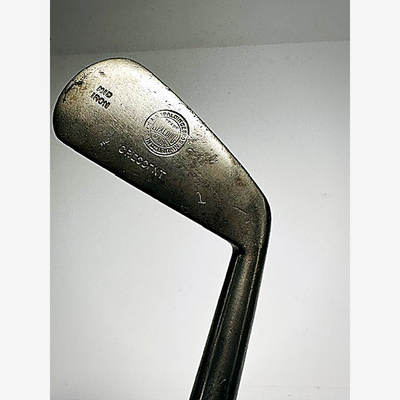
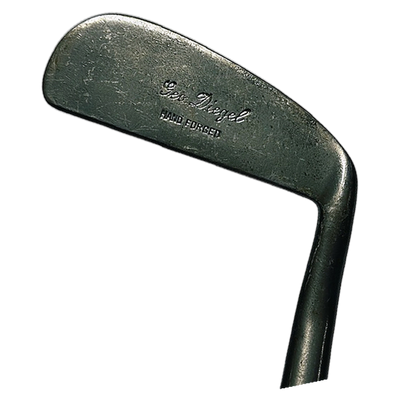
With the shaft inspected and approved, I turn to the head. Iron heads get a thorough cleaning to remove decades of dirt, rust, and grime. I use a combination of methods depending on the condition. Wire brushing removes loose rust and surface crud. Heavily oxidized heads get soaked in a rust-removal solution. Then I hand polish to bring back the metal's character without destroying the patina.
There's a balance here. I'm not trying to make a 100-year-old club look like it was forged yesterday. That would erase its history. The goal is to remove the damaging corrosion while preserving the honest wear that shows this club was played and loved. The maker's stampings, the club name, the hand-forged character of the head: all of that should be visible and clear when I'm done.
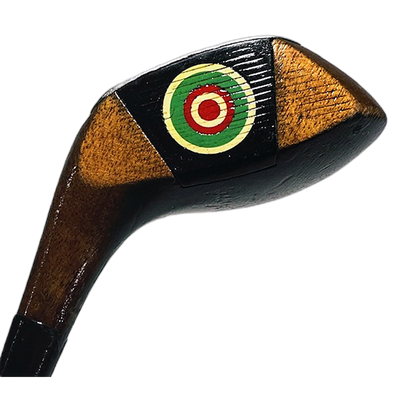
For wood club heads, the process involves careful cleaning, checking for cracks in the persimmon, and evaluating the face insert (if present). Damaged inserts get repaired or replaced with period-appropriate materials.
Step 5: Re-pinning
The shaft connects to the head through the hosel, secured by a pin that runs through both. Original pins are often rusted, bent, or undersized from years of play. I replace them with properly fitted new pins that provide a secure, rattle-free connection.
The shaft has to seat fully and firmly in the hosel. If there's any play or looseness, I address it before pinning. A club that rattles or shifts during the swing isn't annoying. It's a safety hazard. Getting this joint right is essential to a club that feels solid and performs consistently.
Step 6: Staining and Finishing the Shaft
Once the shaft passes inspection and the head is secured, I stain and finish the wood. This serves both cosmetic and protective purposes.
I use oil-based stains that penetrate the wood and protect it from moisture, which is hickory's biggest enemy. The color depends on the club and the era. Early clubs tend to have darker, richer stains. Later clubs often have lighter, more natural finishes. I try to match what's appropriate for each specific club.
After staining, I apply a finish coat that protects the shaft while still allowing you to feel the wood in your hands. Some restorers go heavy on polyurethane, which creates a plastic-feeling club that doesn't age well. I prefer finishes that let the hickory breathe and develop character over time with play.
Step 7: Grip Wrapping
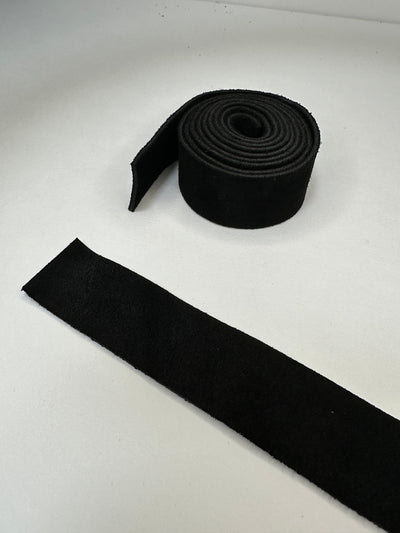
The grip is your only contact point with the club, so it matters a lot. When the original grip is too far gone, I re-wrap with genuine leather using traditional techniques. But if the original grip has aged well and still does its job, I leave it alone — some 1920s leather is better than anything I could put back on.
The process starts with an underlisting, a base layer that builds up the grip to the proper diameter and provides cushioning. Over that goes the leather wrap, applied spirally with consistent tension and overlap. Getting the taper right, slightly thicker at the top and tapering toward the shaft, requires practice and a trained hand.
At the top and bottom of the leather, I apply traditional whipping. This is the thread wrapping you see on properly finished hickory clubs. It serves a practical purpose, securing the leather edges so they don't peel, and an aesthetic one. Clean, tight whipping is one of the hallmarks of quality restoration work.
Some restorers use suede or synthetic materials. I stick with smooth leather for most clubs because that's what was used historically, and frankly, it feels better. There's a reason leather grips have been used for centuries.
Step 8: Final Inspection
Before any club goes into my shop, it gets a final inspection. I'm checking head security (no movement, no rattle), shaft integrity (one more flex test), grip quality (even wrap, secure whipping, proper taper), overall aesthetics (does it look right for its era and maker?), and playability. I swing each club to feel the balance and action.
If anything doesn't meet my standard, it goes back to the bench. I'd rather spend another hour on a club than put something out there that doesn't represent what I stand for.
Want to see what a finished club looks like? Browse the restored irons, woods, and putters currently in the shop. Every one came through the same process. If you've got an old club sitting in your garage that you'd like brought back to life, send it my way. Restoration work is half of what I do.
Like this kind of story?
One short email a month. New restorations, a bit of history, the occasional rabbit hole.
What "Tournament Ready" Means
When I describe a club as tournament ready, I mean it meets the standards for play in Society of Hickory Golfers sanctioned events and similar tournaments. The shaft is structurally sound and free of cracks. The head is securely attached with no play or looseness. The club conforms to pre-1935 design specifications. The grip is properly wrapped and comfortable. And the club has been swung and tested, not just assembled and photographed.
Tournament ready means you can grab this club, put it in your bag, and play a competitive round without a second thought about equipment reliability. That's the standard.
Why Professional Restoration Matters
If you're trying to decide between a restored original and a modern replica, I wrote up the tradeoffs separately. Both have their place.
Can you restore hickory clubs yourself? Sure, people do. There are forums, videos, and communities dedicated to DIY restoration. For some people, that's part of the fun.
But here's what I've learned after years of doing this: the difference between a club that looks restored and a club that plays like it should is significant. It comes down to the shaft inspection. Without experience handling hundreds of hickory shafts, it's hard to know what a compromised shaft feels like versus a sound one. A shaft that snaps during your backswing isn't disappointing. It's dangerous.
The other factor is consistency. When you buy a restored club from someone who does this professionally, you know what you're getting. The quality is the same from one club to the next. That matters when you're building a set and want clubs that work together.
See the Results
Clubs in our shop have all come through this process — some kept their original shafts or grips, others got new hickory shafts and fresh leather wraps where the originals couldn't be saved. Either way, the head is authentic vintage and the work meets my standard. If you want one that's already done, sourced and play-tested, start with the Kro-Flite PGA 8-Club hickory play set at $175, or browse the full shop for individual irons, woods, and putters.
If you've got clubs of your own, grandpa's old set in the attic, an estate find, a flea market score, I take on restoration work too. Tell me what you've got and I'll let you know what's possible. I love seeing what comes through the door.
Ready to play? Three places to start.
Kro-Flite PGA 8-Club Hickory Play Set
Restored, play-tested, ready to ship. The starter set most players grab.
$175Tad Moore OA Complete Hickory Set
Premium replica complete set. Tournament-grade out of the bag.
$1,700Forgan & Son St Andrews Smooth-Face Iron
A single restored Scottish iron, a piece of golf history for $30.
$30Shop Restored Clubs Restore Your Own Clubs
Frequently asked questions
How are hickory golf clubs restored?
Restoration is an eight-step process: selection, disassembly, shaft inspection, head restoration, re-pinning, wood finishing, grip wrapping, and final play testing. The shaft inspection is the make-or-break stage. Old World Hickory Golf considers a club tournament-ready only after Brad has swung it himself.
What's the most important part of restoring a hickory club?
The shaft. The shaft is what makes a hickory club playable or decorative. Hidden cracks, worm holes, soft spots, or grain breaks make a shaft unsafe for play even when the head looks pristine. Most of Brad's reject decisions happen at the shaft inspection stage.
Can you restore a hickory golf club yourself?
You can clean, regrip, and refinish a club at home. What's hard to replicate without years of experience is consistent shaft evaluation, proper re-pinning, and knowing when to walk away from a piece that looks restorable but isn't. Most DIY restorations end up either over-restored (stripped patina, looks fake) or under-restored (unsafe to swing).
How long does hickory restoration take?
A single restoration takes anywhere from four hours to a full day, depending on what the club needs. Re-pinning and wood finishing have wait times for curing. Most clubs are in the shop for one to two weeks from intake to ready-to-ship.
What makes a hickory club tournament-ready?
A tournament-ready club has a structurally sound shaft, a head securely pinned, fresh leather grip, and a balance that swings cleanly. Society of Hickory Golfers events require pre-1935 original clubs. Old World Hickory Golf restores to that standard.
Should I restore an old hickory club or buy one already restored?
If you want to play it, buy one already restored from a working shop. The cost of materials, time, and the risk of getting it wrong on a shaft you can't safely test usually exceeds the price of buying it done right. Restored playable clubs at Old World Hickory Golf start at $45.
Do hickory clubs need restoration for display only?
No. Decor pieces don't need playable restoration. A light cleaning and grip rewrap is enough for a club going on a wall. Pay for full restoration only if you intend to swing it. See our wall decor buyer's guide for what to look for in a display-grade club.