You found an old golf club. Maybe it was in your grandfather's garage, maybe you spotted it at an estate sale, maybe someone handed you a bag of rusty irons and said "these might be worth something." Now you're wondering: what is my hickory club worth? Is it rare? Should I sell it, restore it, or just hang it on the wall?
I've been restoring and appraising hickory golf clubs for years, and I get this question more than any other. The short answer is that most old golf club value falls somewhere between five and fifty dollars. But some are worth considerably more, and knowing the difference comes down to understanding a handful of key factors. This guide will walk you through everything you need to identify what you've got, assess its condition, and figure out what it's actually worth.
First Things First: Is It Actually a Hickory Club?
Before you can appraise an old golf club, you need to know what era it's from. The single most important distinction is whether the shaft is hickory (wood) or steel.
The Shaft Test
Look at the shaft. If it's made of wood, you've got a hickory club (or occasionally ash or lemonwood, but hickory was dominant from the late 1800s through the early 1930s). If the shaft is metal, it's a steel-shafted club from the mid-1930s or later. Steel shafts were legalized by the USGA in 1924 and the R&A in 1929, but hickory remained common through about 1935.
Here's the quick visual check: hickory shafts have visible wood grain running the length of the shaft. They're typically a medium to dark brown color, sometimes with a slight taper. Steel shafts are uniform in color, often chrome-plated, with no grain pattern. If you're still unsure, run your thumbnail along the shaft. Wood grain is something you can feel.
One thing that trips people up: Pyratone shafts. These were steel shafts coated in a painted finish designed to look like wood. They showed up in the late 1920s and early 1930s as a transition product. From a distance they can fool you. Two quick ways to tell the difference. First, grab a refrigerator magnet and hold it to the shaft. If it sticks, it's steel with a Pyratone coating, not hickory. Second, look at the shaft where it enters the hosel. A genuine hickory shaft is noticeably thicker at the hosel than a steel one, even a coated steel one. If the shaft diameter at the hosel looks the same as a modern steel club, you're looking at Pyratone, not wood.
Era Markers
Beyond the shaft material, certain features help you date a club more precisely.
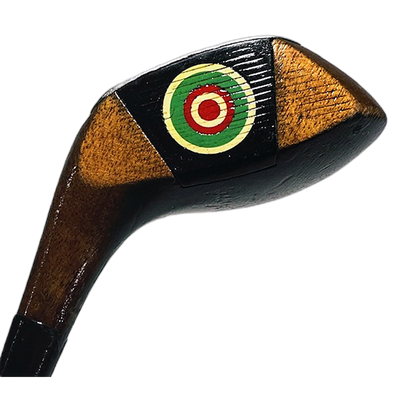
Pre-1900 clubs tend to have long-nose woods, smooth-face irons with no scoring lines, leather or sheepskin grips, and often no maker stamps at all. Clubs from the 1890s to 1910s are transitional, with shorter and more compact wood heads, hand-punched dot face patterns on irons, and cleek marks becoming standard. By the 1910s and 1920s, you'll see machine-scored face lines, deeper cavity backs emerging, flanged soles on irons, and standard maker stamps. The final hickory era, roughly the 1920s to 1935, produced more modern-looking heads that start approaching current iron shapes, with matched sets becoming common and patent numbers appearing on some clubs.
The older the club, the more likely it carries significant value. But age alone doesn't determine worth. A common 1920s mashie niblick in rough condition might be worth less than a well-preserved 1910s club from a notable maker.
Vintage Golf Club Identification: Cleek Marks and Maker Stamps
Vintage golf club identification starts with the maker's mark, which is like a signature on a painting. It tells you who made it, and that information drives a huge portion of the club's value.
Where to Look
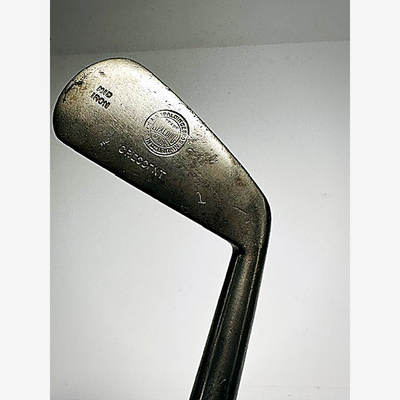
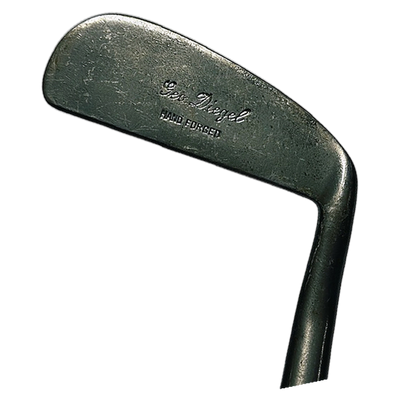
Check the back of the iron head, typically in the center or toward the toe. On woods, look at the sole plate or the crown. Stamps can be faint after a century of use, so get good light and look at an angle. Sometimes a light rubbing with fine steel wool will reveal a stamp that's nearly invisible under grime and oxidation. Be gentle though. Aggressive cleaning can damage the stamp and reduce value.
Common Valuable Maker Marks
These are the names and marks that make a collector's pulse quicken.
Tom Stewart (pipe mark) is probably the most iconic. A small pipe symbol stamped into the head. Stewart worked in St Andrews and Argyll, Scotland, and his clubs are among the most sought-after. The pipe mark is immediately recognizable to anyone in the hickory world, and clubs with a clear pipe mark command premium prices.
Robert Forgan & Son, based in St Andrews, was one of the premier clubmakers of the 19th and early 20th centuries. Look for the "R. Forgan & Son" stamp, often accompanied by the Prince of Wales feathers, a royal warrant they earned. Forgan woods in good condition are particularly valuable.
Anderson & Sons (D. Anderson) is another St Andrews maker who produced high-quality clubs from the mid-1800s through the early 1900s. Their long-nose woods are highly collectible.
The Park Family carries historical significance that goes beyond quality. Willie Park Sr. won the first Open Championship in 1860, and both he and Willie Park Jr. were accomplished clubmakers.
The Morris Family, Old Tom Morris and Young Tom Morris, are legends of the game. Clubs bearing the Morris name or produced at their St Andrews shop are among the most valuable hickory clubs in existence. Authenticated Morris clubs can reach four figures easily.
George Nicoll, based in Kirriemuir, Scotland, produced excellent irons including the famous "Indicator" and "Wizard" models. Good examples are readily available and represent strong value for players.
James Anderson (not to be confused with D. Anderson & Sons) produced quality clubs that are well-regarded among players and collectors alike.
Gibson of Kinghorn made the Star brand clubs, which were popular and well-made. They're more common than some of the premium makers but still desirable.
American makers worth noting include A.G. Spalding, Crawford McGregor & Canby, Burke Manufacturing, and Wright & Ditson. These are generally more common than the Scottish makers but can still carry solid value, especially in excellent condition or rare models.
Key Value Factors
Once you've identified the maker, four factors determine what a club is worth.
1. Maker and Origin
As covered above, who made the club matters enormously. A Tom Stewart iron will always be worth more than an unmarked equivalent in similar condition. Scottish makers generally command higher prices than American mass producers, and clubs from famous golfing families (Morris, Park, Auchterlonie) carry a historical premium.
2. Era and Rarity
Older clubs are generally rarer. Pre-1900 clubs in any condition are uncommon. Specific models that were produced in limited quantities or represent transitional designs (the shift from long-nose to bulger woods, for instance) are particularly sought after. Patent clubs, clubs with unusual designs or mechanisms, always draw collector interest.
3. Condition
Condition matters, but not always in the way people expect. For collectors, original condition is paramount. They want untouched clubs with original grips, original shafts, and clear maker stamps. For players, structural soundness and playability matter more than cosmetic perfection. A restored club with a new grip but a solid original shaft and tight head is perfect for the course, even if a collector would prefer it unaltered.
4. Playability vs. Collectibility
Some clubs are valuable because they play well. Others are valuable because they're rare. The sweet spot is a club that's both, but you should understand which market you're in. A common but well-made mashie in great playing condition might be worth more to a hickory golfer than a rare but fragile collectible that nobody wants to risk swinging.
Grading Your Club's Condition
Here's the grading system I use and that you'll see referenced across the hickory community.
Mint means essentially unused or nearly so. Original grip intact, shaft perfect, head shows almost no wear, clear maker stamp. These are exceptionally rare for clubs that are 80 to 130 years old. If you find one, you probably have something special.
Excellent means light play wear but well-preserved. Original shaft sound with no repairs. Maker stamp clearly legible. Head shows normal use but no significant damage. Grip may be worn but intact. These clubs command top prices in both the collector and player markets.
Good is moderate wear consistent with regular play. Shaft may have been refinished. Maker stamp visible but may be partially worn. Head shows use marks, minor dings, normal sole wear. This is where most quality playable clubs fall, and it's the sweet spot for value-conscious players.
Fair is significant wear. Shaft may have minor repairs or a replaced grip. Maker stamp faint or partially legible. Head shows heavy use, some pitting, or cosmetic issues. Still structurally sound enough to play or restore. These clubs have value but need work to reach their potential.
Poor means major issues. Cracked or repaired shaft, loose head, heavy rust or pitting, illegible stamps. Wall-hangers unless someone with the skills and patience is willing to invest in restoration. Value is minimal unless the maker or model is rare enough to justify the work.
Not sure what you've got?
I'll send you the maker-mark cheat sheet, plus a heads-up when new restored clubs hit the shop.
Old Golf Club Value: What They're Actually Worth
Let's talk numbers. These are realistic market ranges based on what clubs actually sell for, not what optimistic eBay sellers list them at.
Raw Unrestored Clubs: $5 to $30
This is where most old golf clubs land. A common maker, fair to poor condition, needs new grip and possibly shaft work. You'll find bins of these at antique malls, estate sales, and flea markets. They're the raw material for restoration, and at these prices, they're worth picking up if the shaft is sound and the head is interesting. But don't expect a windfall. The market has plenty of supply at this tier.
Restored Playable Clubs: $45 to $150
A properly restored hickory club in good to excellent condition, with a new grip, cleaned and stabilized head, sound shaft, and ready for the course. This is the heart of what we sell at Old World Hickory Golf, and it's where I think the best value lives. You're getting a piece of genuine history, professionally brought back to playing condition, for less than you'd spend on a single modern wedge. Individual clubs in this range cover everything from solid players to premium examples from notable makers.
Premium and Rare Clubs: $150 to $500+
Clubs from the most sought-after makers in excellent to mint condition. Tom Stewart pipe-mark irons in beautiful shape. Early Forgan woods with clear stamps. Rare patent clubs. Pre-1900 pieces with documented provenance. At this tier, you're buying something that's both playable and collectible, and these clubs tend to appreciate over time. The very top end of the market, authenticated Morris or Park clubs and museum-quality pieces, can reach well into four figures, but that's a specialized collector market.
Replica Hickory Clubs: $150 to $300
Worth mentioning for context: new-manufacture replica hickory clubs from makers like Louisville Golf and Tad Moore run $150 to $300 per club. These are modern reproductions designed to look and play like originals, but they're not antiques. I cover the full comparison between restored originals and replicas in our restored vs. replica buying guide, but the short version is that you can get a genuine restored original for significantly less than a modern copy.
What Makes a Club Worth Restoring?
Not every old club is worth the time and cost of professional restoration. Here's my rule of thumb:
A club is worth restoring if the shaft is structurally sound, the head is from a quality maker, and the overall condition is fair or better. The shaft is the most important factor. A cracked or split shaft can be repaired in some cases, but replacement shafts (while available) change the character of the club and reduce its value to collectors. If the original shaft is solid, you've got a foundation worth building on.
The head matters too. Forged heads from reputable makers clean up beautifully and play wonderfully. Mass-produced heads with thin faces or sloppy work aren't going to become something they never were, no matter how good the restoration.
If you want to understand the full restoration process, I wrote up a detailed look at how I restore hickory clubs from start to finish. It's a hands-on process, not a production line, and knowing what goes into it helps you appreciate why a properly restored club plays as well as it does.
Common Misconceptions About Old Golf Club Value
A few things I hear regularly that need correcting:
"It's old, so it must be valuable." Age helps, but it's one factor among many. A common 1920s iron in poor condition is worth five bucks, regardless of how old it is. Maker, condition, and rarity matter more than age alone.
"I saw one like this on eBay for $200." Listing price and selling price are very different things. Anyone can list a club for any amount. What matters is what buyers actually pay. Check completed/sold listings, not active ones, for realistic pricing.
"The rust adds character." Some patina is fine and even desirable. Heavy rust that's pitted the metal surface has damaged the club. There's a line between honest age and destructive neglect, and experienced eyes can tell the difference immediately.
"It has to be worth more because it's a complete set." Matched sets from the hickory era are relatively uncommon since most golfers assembled their bags one club at a time. A genuine matched set from a premium maker can command a premium. But a random assortment of unrelated clubs shoved into a bag isn't a "set" in any meaningful sense, and grouping them together doesn't increase individual club values.
Get Your Club Appraised
If you've read all of this and you're still not sure what you've got, send me the photos. I just like the puzzle of figuring out what's in someone's grandfather's garage.
Three or four shots will do it: the full club, a close-up of the maker's mark on the back of the head, the shaft where it meets the hosel, and the grip. I'll come back with the maker, approximate year, condition grade, and a realistic value range. Usually within a day or two. No charge, no sales pitch.
Send Photos for a Free Appraisal
More from the Hickory Journal
- Complete Guide to Hickory Golf Club Types
- How Hickory Golf Club Restoration Works
- How Much Do Hickory Golf Clubs Cost?
- Restored vs. Replica Hickory Clubs
See what restored originals actually sell for. Curious how the price tiers above translate to real clubs? Here are a few from the shop right now. Restored, play-tested, ready to go.
Forgan & Son St Andrews Smooth-Face Iron
Anchors the Raw $5-30 tier and the Forgan paragraph above.
$30Gibson & Co Kinghorn Mashie
The "common but desirable" Scottish maker, restored.
$25Pre-1904 Gutty Era 4-Club Set
Real pre-1900 era irons, smooth-face, set of four.
$125Frequently asked questions
How do I know if my old golf club is worth anything?
Four things drive value: shaft material (hickory beats steel for collectability), maker mark, condition, and rarity. Most clubs fall in the $5-$150 range. A Tom Stewart with a clean pipe mark in good condition can hit $300-$500. Send photos to Old World Hickory Golf for a free appraisal.
How do you tell hickory from steel shaft golf clubs?
Look at the shaft. Hickory has visible wood grain running its length. Steel is uniform and metallic. A refrigerator magnet confirms it: a magnet won't stick to wood, but it will stick to most steel shafts (including the Pyratone-coated steel shafts that were made to look like wood).
What makers of hickory golf clubs are most valuable?
Scottish makers Tom Stewart (pipe mark), Robert Forgan & Son, the Morris family, Robert Condie (fern and rose marks), and McEwan command premium prices. American makers Spalding, Wilson, and MacGregor have lower values but solid demand. Patent and limited-production pieces from any maker run higher.
Is age the main factor in a hickory club's value?
No. Maker, condition, and rarity matter more than age. A poorly-made 130-year-old American club may be worth less than a clean 95-year-old Tom Stewart. The age-alone myth costs sellers money on auction sites every day.
What condition grades do appraisers use for hickory clubs?
Grades run from Mint (essentially unused, rare) through Excellent, Very Good, Good (most clubs), Fair, and Poor. Most market-circulating clubs grade Good â moderate wear from regular play with all original parts intact and structurally sound.
Does Old World Hickory Golf appraise hickory clubs?
Yes, and the appraisal is free. Email photos of the head (both sides showing maker marks), the full club, and any inscriptions. Brad will reply with a value range and whether it's worth restoring or selling as-is.
Why are eBay prices for hickory clubs higher than what they actually sell for?
Listing prices and selling prices are different things. Many hickory clubs sit on eBay for months at optimistic prices without selling. Sold-comparable data is the only reliable price benchmark, not asking prices.
Is my old golf club worth more as decor or restored to play?
Depends on the shaft. A structurally sound shaft means it can go either way â restore for play or sell for decor. A cracked or worm-damaged shaft is decor-only, which still has real value if the head carries a named maker's stamp and the patina is right. See our wall decor buyer's guide for what makes a club worth hanging.